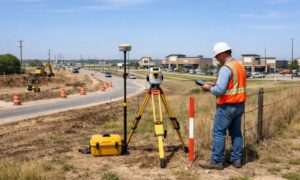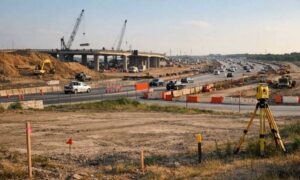
If you are thinking about buying commercial property near the I-20 corridor in Fort Worth, an ALTA survey should be one of the first things on your list. TxDOT is in the middle of a $2.2 billion project called Keep 20-30 Moving. It runs through 2030 and is changing roads, ramps, and access points across a wide stretch of the highway. What you see when you visit a property today may not be what you get after closing. A deed will not warn you. A site visit will not either. An ALTA survey will.
What TxDOT Is Actually Building on I-20
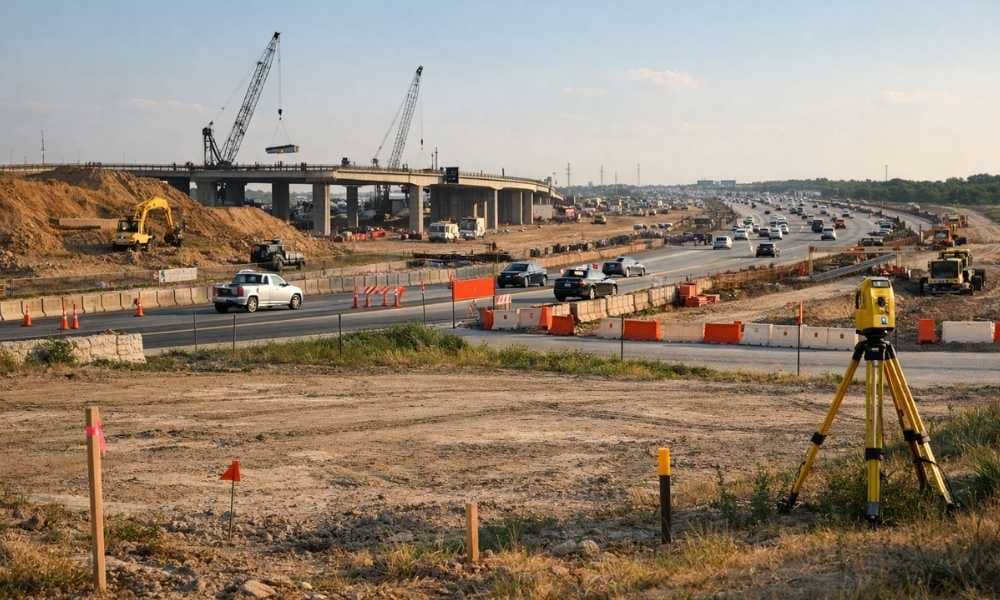
This is not a simple repaving job. TxDOT is widening I-20 and I-30 from four lanes to six, building new frontage roads along the corridor, adding new interchanges at Bentley Bridge Drive and Walsh Ranch Parkway, and changing ramp locations between FM 1187 and the I-20/I-30 split.
The work is split into phases. Phase 1 covered I-20 between Markum Ranch Road and the I-20/I-30 split, with a target finish in early 2026. Phase 2 runs between FM 1187 and Linkcrest Drive and is scheduled through early 2028. A third phase goes to 2030.
Each phase changes how the road looks and how drivers get in and out of nearby properties. A frontage road that lines up with a property’s driveway today could be moved, flipped to one direction, or blocked by construction before a buyer even reaches closing day.
Legal Access Is Not the Same as Being Able to Pull In
This is the part most buyers do not know until it is too late.
When you buy commercial property, your title insurance covers what is called “legal access.” That means there is a recorded right for you to reach the property from a public road. It does not mean a truck can actually pull in and out the way you are imagining.
An ALTA survey checks physical reality. It shows every street and highway next to the property, where each driveway opening is and how wide it is, anything blocking vehicle entry, and whether access goes directly to a public road or runs through land owned by someone else.
Here is why that matters near I-20. When TxDOT moves a frontage road, a driveway that used to connect smoothly may now end at a construction barrier, a one-way lane going the wrong way, or a ramp entrance that was shifted east. The title company will not flag that. The ALTA survey will.
Right-of-Way Strips and Easements You Did Not Know Were There
When TxDOT widens a highway, it often needs to take a strip of land along the road’s edge. In many cases, that strip has already been recorded in county records before the property ever went up for sale.
That matters because you could be paying for land you cannot use. A property listed at 1.2 acres might have a TxDOT right-of-way strip cutting across the front, shrinking the buildable area. The highway project might also come with drainage easements that cross the site and limit where a structure can go. There can even be temporary construction easements that give TxDOT the right to access part of the property while the project is ongoing. If you close without knowing about these, they become your problem.
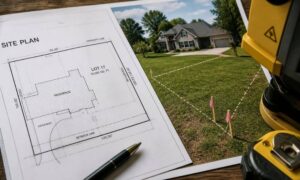
An ALTA survey takes all the recorded claims listed in the title documents and draws them on top of the actual property map. Instead of reading through pages of legal descriptions, you see exactly what is already claimed and where it sits.
What Your Lender Needs When a Road Project Is Active
Banks and lenders that finance commercial property near active highway work want proof that the property is what the paperwork says it is. An ALTA survey gives them that proof.
For a corridor property, the survey needs to show the property boundary lines matching the title documents, all easements drawn on the map, confirmed access with a legal basis behind it, and a signature and seal from a licensed Texas land surveyor.
One thing worth knowing: if a lender does not require an ALTA survey for your specific deal, that does not mean you are safe to skip it. It means the lender’s standard checklist was not written with active TxDOT construction zones in mind. Your due diligence period is the time to check what they did not ask for.
Order the Survey at the Right Time
An ALTA survey shows what is true on the day the surveyor does the fieldwork. Since TxDOT’s I-20 project keeps moving through phases, a survey from six months ago may already be missing something important.
Order your ALTA survey as close to your contract signing date as possible. Ask the surveyor to flag any TxDOT construction staking or right-of-way markers visible near the property during the site visit.
It is also smart to request specific optional items from the ALTA Table A list. Item 6 covers zoning and setback requirements. Item 11 covers underground utilities, which TxDOT projects often relocate. Item 19 documents the physical access points observed on the property.
If you need a few extra days in your option period to get the survey done properly, take them. Finding a problem before closing is always cheaper than finding it after.