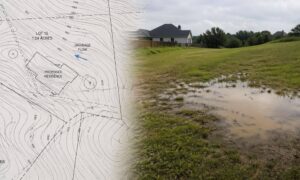
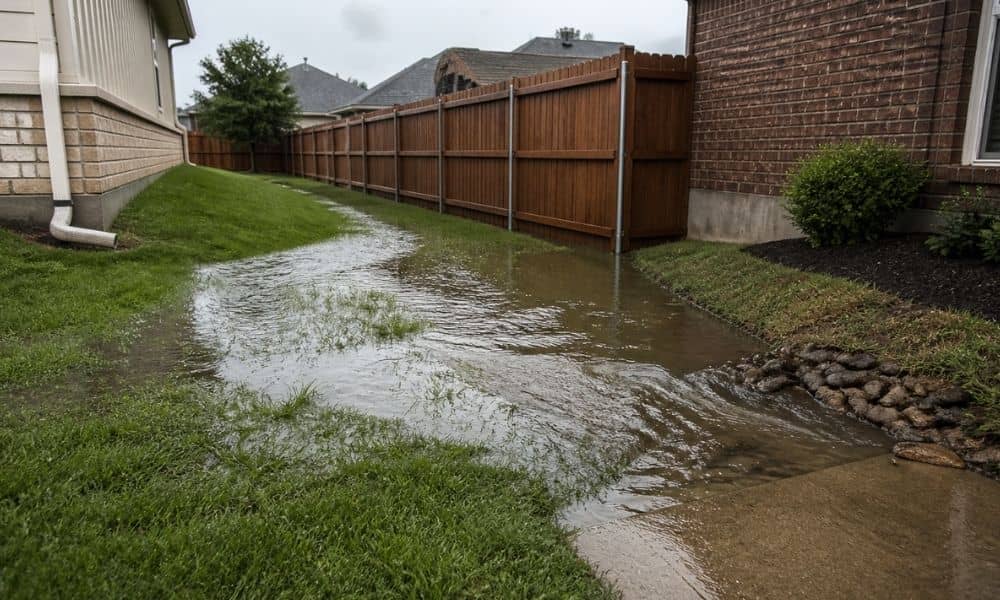
You didn’t touch your yard. Then one day, after a heavy rain, water starts sitting where it never did before. Maybe it runs along your fence. Maybe it heads straight for your house.
A lot of homeowners deal with this after a neighbor changes something next door. It could be new concrete. It could be added dirt. It could be a small slope change that didn’t seem like a big deal at the time.
Now your yard holds the water.
This kind of problem shows up more often than people think. In fact, many homeowners talk about it online when they can’t figure out what went wrong. And after a few storms, frustration turns into action. That’s when people start searching for engineering consultants near me.
When a Neighbor’s Yard Work Changes Your Property
Most drainage problems start with a small change.
A neighbor adds a patio. They raise their yard a few inches. They remove a low area that used to carry water away. Or they install a driveway that blocks the natural path of runoff.
Each change seems harmless on its own. However, water doesn’t forget where it used to go. It finds a new path.
That new path often leads downhill. If your property sits lower, you feel it first.
You might not notice anything right away. Then a strong rain hits, and suddenly your yard looks different. Water moves faster. It stays longer. It shows up in spots that used to stay dry.
Why the Problem Shows Up After Rain
Dry days can hide a lot.
The ground looks fine. The grass looks normal. Even after a light rain, everything might drain the way it should.
Then a heavy storm comes through Fort Worth.
Now the soil can’t keep up. Clay-heavy ground slows down absorption. Water runs across the surface instead. If the slope changed next door, that runoff now has a new direction.
That’s when the problem becomes clear.
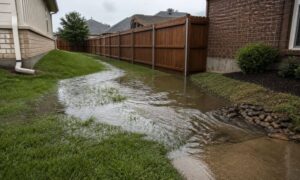
Water pools near your fence. It creeps toward your foundation. It may even cut small channels in your yard.
At that point, it stops being a guess. Something changed.
How Drainage Changes Turn Into Real Damage
Standing water isn’t just annoying. It causes real issues over time.
Water near your foundation can weaken the soil. That leads to movement. Cracks can follow.
Erosion can also start along property edges. You might notice soil washing away after each storm.
In some cases, water flows toward driveways or garages. That can lead to long-term damage if it keeps happening.
Even your yard becomes harder to use. Wet spots stay soft. Grass struggles to grow. Mosquitoes show up fast.
These problems build slowly. Still, they don’t fix themselves.
Why This Isn’t About Property Lines
A lot of people think this is a survey issue. In most cases, it’s not that simple.
Surveys show where your property starts and ends, but they don’t explain why water suddenly moves in a different direction.
Drainage problems come down to slope, elevation, and how water flows across the ground. That’s where engineering comes in.
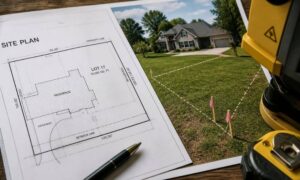
Still, if the water changed direction, something in the grading likely shifted. In some cases, a survey to confirm elevation changes can help make sense of what actually moved and why the water is now reaching your property.
What Engineering Consultants Look At
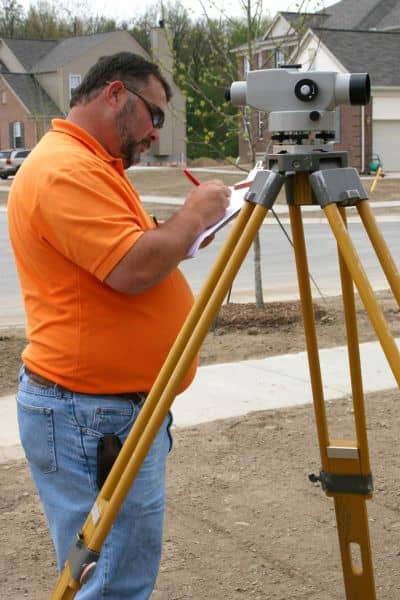
When homeowners call engineering consultants near me, they want answers.
The engineer starts by looking at the land as it is today. Then they compare it to how it likely worked before.
They study slope. Even small changes matter. A few inches can shift water across an entire yard.
They also look at surfaces. Concrete, roofs, and compacted soil push water faster than grass. If a neighbor added hard surfaces, runoff can increase right away.
Next comes flow direction. Where does the water come from? Where does it go now?
The goal is simple. Find out what changed and how it affects your property.
Why Talking It Out Often Fails
Most neighbors don’t try to cause problems.
They might not even know they changed the drainage. From their side, everything looks fine.
So when you bring it up, the conversation stalls. One side sees water. The other sees no issue.
Without clear proof, it turns into opinions. That rarely leads to a solution.
You end up stuck, especially after each new storm makes things worse.
When Homeowners Start Looking for Help
At some point, the situation crosses a line.
Maybe the water keeps coming back after every rain. Maybe you see signs near your foundation. Or maybe the conversation with your neighbor goes nowhere.
That’s when people start searching for engineering consultants near me.
They want someone who can explain what’s happening in plain terms. More importantly, they want proof.
How an Engineering Review Brings Clarity
An engineering assessment turns guesswork into facts.
Instead of arguing about what might be happening, you get a clear explanation of how water moves across the property.
The engineer can show whether a change in grading caused the issue. They can also explain how runoff now reaches your yard.
This kind of clarity helps in many ways. It gives you a solid position if you talk to your neighbor again. It also helps if you need to involve an HOA or the city.
Most of all, it helps you understand the problem instead of guessing.
Preventing Problems Like This in the Future
Drainage issues often start before anyone notices.
A small yard project can shift water in ways people don’t expect. That’s why planning matters before changes happen.
If someone adds concrete or raises part of their yard, they should think about where the water will go next.
The same applies to your own property. Before making changes, it helps to understand how your land handles rain.
That simple step can prevent bigger problems later.
A Problem That Doesn’t Stay Small
Drainage issues rarely stay minor.
They start with a puddle. Then they show up after every storm. Then they begin to affect the structure of your property.
Many homeowners deal with this quietly at first. After a while, they realize it needs a proper look.
If your yard started behaving differently after nearby changes, there’s usually a reason. Finding that reason early can save time, money, and stress later.