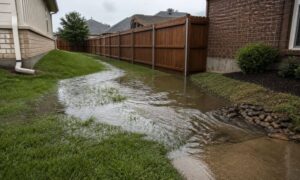
Few things turn neighbors into enemies faster than a fence dispute. One day, you are fixing a leaning panel. The next day, you are arguing about whose land it sits on. In Fort Worth, this situation happens more often than people expect. Homes change hands, fences age, and memories fade. When opinions clash, facts matter. That is where a boundary line survey becomes the calm voice in a heated conversation.
How Fence Disputes Usually Start
Most fence problems begin with good intentions. A homeowner replaces an old fence. A neighbor plans new landscaping. Someone wants to add a gate or extend a yard. However, the moment work starts, questions appear. “Is that fence on my land?” “My old survey shows something different.” “The county map says the line is over here.”
At that point, emotions rise. Each side feels confident. Yet confidence does not equal accuracy. In many cases, neither homeowner has the full picture.
Why This Happens So Often in Fort Worth
Fort Worth neighborhoods include a mix of old and new homes. Some fences were built decades ago, long before modern records were easy to access. Others went up during quick renovations or flips. As a result, many fences were placed based on guesswork, not measured boundaries.
Also, many buyers rely on online maps or real estate listings. Those tools help with general location, but they do not show true property lines. Over time, small errors turn into big arguments. When a fence becomes the focus, the issue feels personal, even though it is really about land records.
What Homeowners Often Get Wrong
Online forums and social media show the same fence stories again and again. Homeowners often say things like, “The fence has been there for years, so it must be right,” or “My neighbor agreed to it before.” Others point to a parcel map and call it proof.
Here is the truth. Time alone does not always make a fence legal. Verbal agreements do not change recorded boundaries. Online maps are not surveys. They are guides, not legal documents. When two sides disagree, opinions cannot settle the issue. Measured evidence can.
What a Boundary Line Survey Really Does

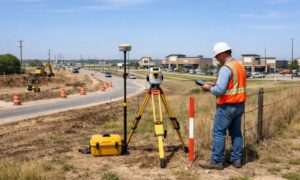
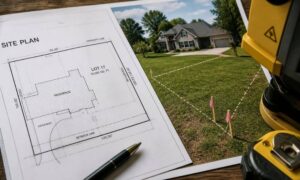
A boundary line survey shows where a property begins and ends based on recorded documents and physical evidence. A licensed land surveyor reviews deeds, plats, and past records. Then they locate existing markers in the ground, such as iron pins or monuments.
After that, the surveyor measures and maps the boundary lines. The fence location is shown in relation to those lines. If the fence crosses over, the survey makes that clear. If it sits correctly, the survey proves that too. The goal is not to take sides. The goal is to show facts.
Why Old Fences Are Not Reliable Proof
Many people believe a fence marks the property line. Sometimes it does. Often, it does not. Fences can shift over time. They can also be placed inside or outside the true line to avoid trees, rocks, or slopes. In older neighborhoods, builders often estimated locations instead of measuring.
Because of that, relying on a fence alone creates risk. Without a boundary line survey, there is no clear answer. With one, both neighbors see the same information on paper. That shared understanding often lowers tension right away.
How a Survey Can Calm the Situation
Once a survey is complete, many disputes end quickly. One neighbor may choose to move the fence. In other cases, both sides agree to share maintenance or adjust plans. Even when emotions run high, clear measurements help people move forward.
If the issue does continue, the survey still helps. It gives attorneys, mediators, or title professionals reliable data. That prevents the argument from turning into guesswork or hearsay. In many cases, the survey saves time, money, and stress.
When You Should Order a Boundary Line Survey
You do not need to wait for a conflict to start. Ordering a boundary line survey early can prevent problems. It is smart to get one before building a new fence, adding a driveway, or placing a shed near a property edge. It also helps when buying or selling a home, especially if boundaries seem unclear.
If a neighbor already raised concerns, ordering a survey quickly shows you want a fair solution. That approach often keeps the conversation civil and focused on facts.
Why a Licensed Surveyor Matters
Not all drawings are surveys. A boundary line survey must come from a licensed land surveyor. That license means the survey follows state rules and professional standards. It also means the work can be trusted by lenders, courts, and title companies.
In Fort Worth, experience matters too. Local surveyors understand neighborhood layouts, historic plats, and development patterns. That local knowledge helps avoid mistakes and delays.
Ending the Argument the Right Way
Fence disputes feel personal, but they do not have to stay that way. When emotions take over, neighbors stop listening. However, when clear measurements enter the conversation, the tone changes. A boundary line survey replaces opinions with facts.
If you are facing a fence dispute in Fort Worth, clarity is your best tool. A proper survey gives you confidence, protects your property rights, and helps restore peace between neighbors. In the end, knowing exactly where the line falls is often the only way to end the argument and move on.