Clear water should mean safe water. However, that assumption no longer holds true in many places. Over the past few days, national news reports have highlighted a growing PFAS problem in private wells across the country. As a result, property owners, buyers, and developers now face new questions about groundwater safety. An environmental engineer deals with water and soil risk every day. So instead of technical language and long regulations, let’s walk through this issue in simple terms. You’ll understand what PFAS is, why private wells face higher risk, and what smart property owners should do next.
Why This PFAS News Matters More Than People Think
Recent news stories show that PFAS contamination does not only affect city water systems. Instead, it increasingly shows up in private wells. That detail changes everything.
City systems must run regular testing and publish reports. Private wells work differently. The owner controls testing, and many owners never check beyond basic bacteria and mineral panels. Because of that gap, PFAS can stay hidden for years.
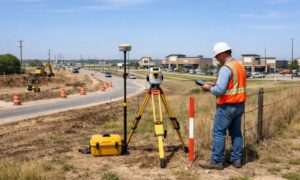
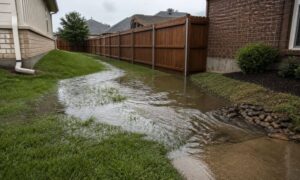
This shift matters for buyers, land developers, and commercial property owners. If a site uses well water, then water quality becomes part of due diligence — just like boundaries, grading, and drainage.
What PFAS Really Is — Without the Science Talk
PFAS stands for a group of man-made chemicals built to resist heat, stains, and water. Companies used them for decades in industrial processes, firefighting foam, and protective coatings. The problem starts with their strength. They do not break down easily.
Therefore, once PFAS enters soil or groundwater, it tends to stay there. Rain and groundwater movement can also spread it beyond the original source. So contamination can travel farther than most people expect.
That persistence explains why regulators and researchers now pay close attention. Better testing methods now detect PFAS at very low levels. As a result, places that once tested “clean” now show measurable traces.
Why Private Wells Sit in the Risk Zone
Private wells draw water directly from underground sources. That sounds pure and natural, and sometimes it is. However, groundwater follows geology — not property lines.
If an industrial site, landfill, airport training area, or chemical storage yard once operated nearby, then groundwater may carry leftover compounds. Over time, that water can move toward residential or development wells.
Most well owners never study historic land use around their property. Yet an environmental engineer always starts there. Site history often tells the real story long before any lab sample does.
This issue also connects to growth areas around cities like Fort Worth. Development pushes outward, and many edge parcels rely on wells. Consequently, more new owners now inherit older groundwater stories.
How an Environmental Engineer Looks at a Well Property
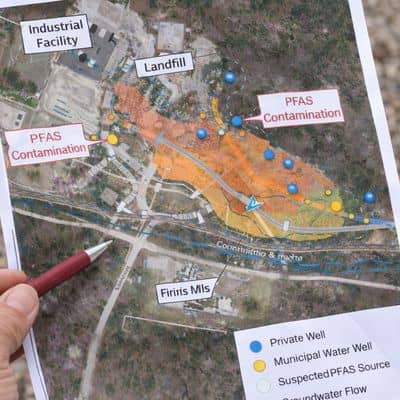
When an environmental engineer reviews a property with a private well, they do not rush straight to testing. First, they build a site picture.
They study past land use, nearby operations, and groundwater direction. They review maps and records. Then they look at risk pathways. Only after that step do they suggest targeted sampling.
This approach saves time and money. It also produces better answers. Random testing without context often creates confusion. Focused testing guided by site history produces useful results.
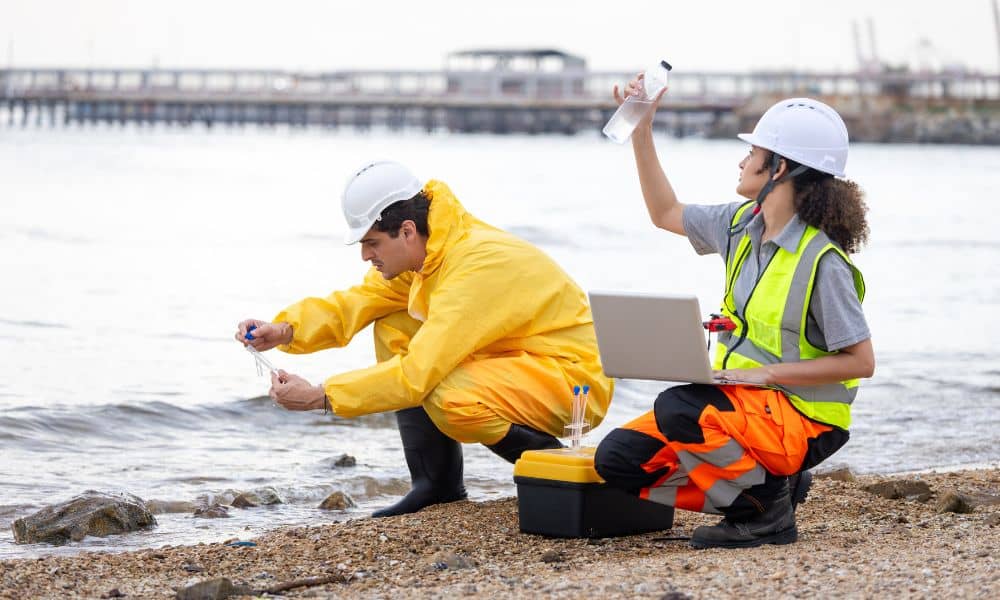
Professional PFAS sampling also requires proper lab handling. Store-bought kits will not give reliable PFAS readings. Therefore, correct sampling matters just as much as the lab method.
What PFAS Test Results Actually Tell You
Numbers alone do not tell a full story. Many people see a lab value and assume the worst. However, interpretation matters more than the raw figure.
Detection simply means the lab found a measurable amount. Risk depends on concentration, exposure, and current guidance levels. An environmental engineer compares results to health thresholds and usage patterns.
For example, occasional low-level detection in non-drinking uses creates a different risk profile than higher levels in daily drinking water. Context changes the conclusion.
Because of that, expert review turns data into decisions instead of fear.
Treatment Works — But It Must Match the Problem
The good news is straightforward: treatment options exist and work well when properly chosen. Still, not every filter solves PFAS issues.
Activated carbon systems remove many PFAS compounds effectively. Reverse osmosis systems remove even more but treat smaller volumes. Some properties only need kitchen drinking water treatment. Others benefit from full entry-point systems.
An environmental engineer helps match the treatment method to the exposure risk and water use pattern. That guidance prevents overspending while still protecting health.
Why Buyers and Developers Should Pay Attention Now
PFAS used to sit outside most property conversations. Today, that changed. Lenders, investors, and review teams now look more closely at environmental exposure pathways.
A buyer who orders a boundary survey and flood study but skips water quality review may miss a key risk factor. Likewise, a developer who checks grading and drainage but ignores groundwater history leaves a gap in due diligence.
Fortunately, early screening remains simple and affordable compared to late discovery. Timing makes the difference.
The Simple Bottom Line
PFAS sounds technical, but the takeaway stays simple. These chemicals last a long time, they travel through groundwater, and private wells receive less oversight. However, smart review and targeted testing remove the guesswork.
An environmental engineer brings structure to the process. They study site history, guide testing, explain results, and recommend practical fixes when needed.
So clear water should not rely on hope alone. With the right evaluation, property owners and developers can replace uncertainty with solid answers — and that always leads to better decisions.