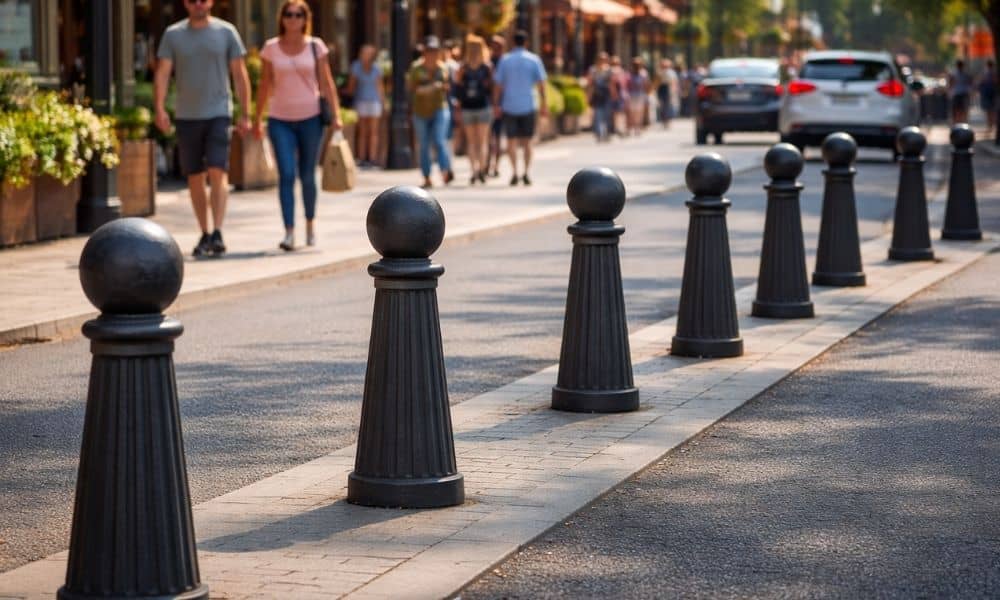
If you have visited the Fort Worth Stockyards lately, you may have seen the new bollards along the street. At first glance, they look simple. Just strong metal posts placed in a line. However, as a traffic engineer, I see something much bigger.
These bollards are not decoration. They are not random barriers. Instead, they are part of a safety plan. They help control how cars and people move in one of the busiest areas in Fort Worth.
Most people walk past them without thinking. Still, they quietly shape how the whole district works.
The Real Challenge in the Stockyards
The Stockyards get very busy, especially on weekends. Tourists walk between shops and restaurants. Families cross the street. Rideshare drivers stop to pick up passengers. Delivery trucks arrive. At the same time, drivers search for parking or try to leave the area.
All of this happens on streets that were built long ago. Back then, traffic was lighter.
Because of that, cars and pedestrians share tight spaces. When their paths cross, the chance of crashes goes up. Traffic engineers call these spots conflict points. The more conflict points there are, the more risk you have.
So while people may focus on how the bollards look, the real goal is to lower those risks before someone gets hurt.
Why Bollards Change Driver Behavior
Bollards control where vehicles can go. When drivers see clear limits, they adjust how they drive. They slow down. They make careful turns. They avoid sudden moves.
In busy places like the Stockyards, clear guidance matters. When drivers guess or make last-minute choices, risk increases. However, when movement feels clear and planned, safety improves.
Bollards also make the street look narrower. When a road looks tight, drivers naturally slow down. That simple change can lower speeds without extra signs or police.
Good traffic design works quietly. It shapes behavior without people even noticing.
Safety Must Still Allow Access
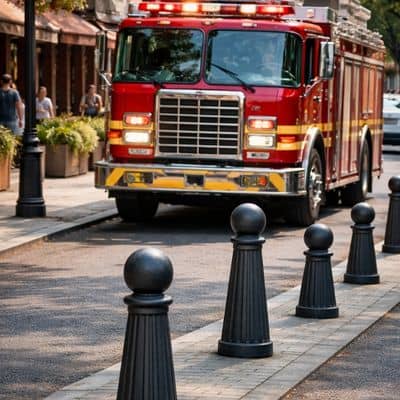
Even with safety upgrades, the Stockyards cannot close off all vehicles. Businesses need deliveries. Emergency vehicles must pass through. Visitors still need places to stop and park.
So a traffic engineer must balance safety with access.
Before placing bollards, we study fire truck turning paths. We review delivery routes. We check traffic during busy hours. We watch how people walk through the area.
Every detail matters. Even a small change can affect how vehicles move.
The goal is simple: protect people while keeping the area working smoothly.
Event Streets Need Flexible Design
The Stockyards feel different during a quiet weekday than during a weekend event. Crowds grow. Traffic builds up. Drivers may feel rushed or distracted.
Because of that, cities now design streets to handle different situations. Some streets operate one way during normal hours and another way during events.
Bollards help make that possible. They guide traffic into safer patterns. In some places, cities even use retractable systems to allow controlled access when needed.
This type of design shows how cities adapt to real life instead of sticking to old plans.
Why This Matters Beyond the Stockyards
You might ask how this affects property owners or developers.
The answer is simple. Cities expect safety planning from the start. When someone builds a new project, the city often asks for a traffic study. A traffic engineer reviews how cars enter and exit the site. We look at nearby intersections. We study how pedestrians move.
Without proper planning, projects face delays. Worse, poor design can increase the risk of crashes.
The Stockyards project shows that safety now plays a bigger role in planning. That same mindset applies to private developments.
Small Changes Can Prevent Big Problems
Many people think safety requires major construction. However, small changes often make a big difference.
Bollards reduce unwanted vehicle movement. They define clear walking areas. They slow down. They reduce confusion.
Most of all, they lower uncertainty.
When drivers know exactly where they can go, they feel less stressed. When pedestrians feel protected, they walk with more confidence. Businesses benefit from a calmer environment.
Even if visitors never think about the design, they feel safer because of it.
The Bigger Picture for Fort Worth
Fort Worth continues to grow. Mixed-use areas expand. Entertainment districts attract more visitors. As the city grows, pedestrian safety will matter even more.
That means cities will continue to focus on smart traffic planning. They will look for ways to protect people without slowing down business.
A traffic engineer helps guide that process. We study how traffic flows. We spot risks early. We design systems that prevent problems instead of reacting after something goes wrong.
The Stockyards bollards reflect that forward thinking.
What Looks Simple Often Isn’t
At first, bollards seem basic. However, careful planning stands behind each one.
They slow cars. They guide movement. They protect people. They support emergency access. They help the district run smoothly during both calm days and busy nights.
So next time you walk through the Stockyards, look again. Those metal posts do more than stand in place. They help keep people safe while allowing the district to thrive.
And as Fort Worth continues to grow, that balance between movement and safety will matter more than ever.