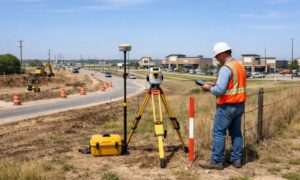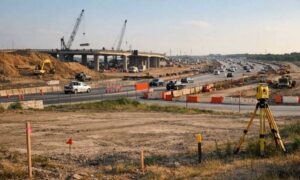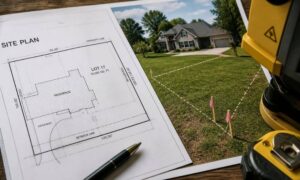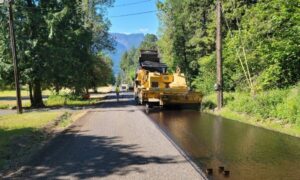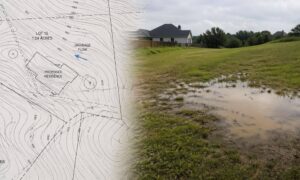
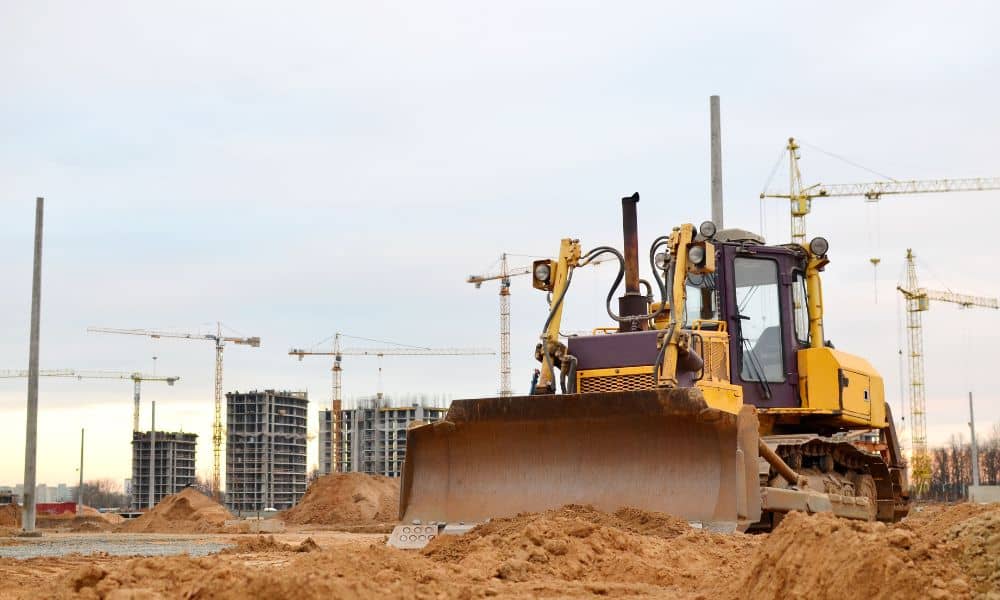
On almost every job site, the same thing happens. The survey crew finishes the layout. Stakes look clean. Control points sit in place. Everyone feels good. Then grading starts. Dozers move dirt. Trucks cut across the site. Utility crews trench through corners. And suddenly, those carefully set points disappear. Now the superintendent calls: “We need it re-staked.” That delay costs time. It costs money. It also creates tension between trades. The truth is simple: strong construction staking starts with smart control planning. If control survives the chaos, the project stays on track. If it doesn’t, the whole site slows down.
Why Control Points Get Wiped Out
First, understand the problem.
Construction sites change every hour. Grading crews reshape the ground. Concrete trucks drive wherever they can fit. Utility contractors trench through areas that looked untouched the day before. Add rain, and even solid ground can wash out.
However, most destroyed control points don’t disappear by accident. They get placed inside active work zones.
If you set control right in the middle of future earthwork, heavy equipment will run it over. If you place hubs too close to slab corners, form crews may pull them. If you skip backup points, one mistake turns into a full reset.
That’s why smart control planning matters more than the staking itself.
Start With the End in Mind
Before setting anything, study the plans.
Look at grading limits. Review excavation areas. Check utility paths. Confirm the latest revision date. Many re-stake problems begin with outdated drawings.
Next, ask one key question:
Where will the site be most stable over the next few weeks?
That answer guides your control placement.
Strong construction staking depends on control that sits outside disturbance zones. If dirt will move there, don’t set control there. It sounds obvious, yet crews rush and place points where it feels convenient.
Convenient rarely survives.
Place Primary Control Outside Active Work Zones
Good control stays out of traffic.
Whenever possible, set primary control on the perimeter of the site. Tie into existing monuments, curb lines, or right-of-way markers that won’t shift. If you work on a subdivision, use lot corners outside grading limits. On commercial pads, use areas beyond cut and fill lines.
Additionally, think ahead. If the project will expand into future phases, protect your long-term control from early activity.
You don’t just want control for today’s layout. You want control that lasts through the life of the project.
When clients hear that, they understand. They care about schedule stability, not just survey accuracy.
Build Redundancy Into Every Setup
One control point is not control.
At minimum, establish two independent points. Better yet, create a small network. Cross-check distances and angles. Verify closure before staking building corners.
If one point disappears, you can re-establish it quickly from the others. That backup system keeps construction staking moving without delay.
Think of redundancy as insurance. You hope you won’t need it. However, when something goes wrong, it saves the day.
And on busy sites, something always goes wrong.
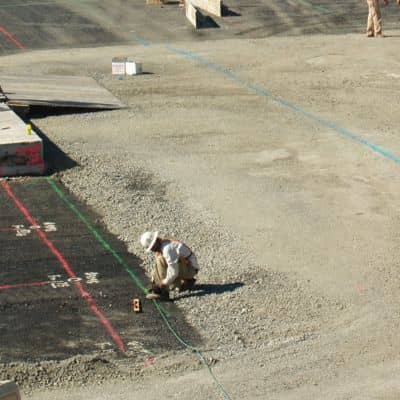
Use Offsets That Protect the Work
One control point is not control.
At minimum, establish two independent points. Better yet, create a small network. Cross-check distances and angles. Verify closure before staking building corners.
If one point disappears, you can re-establish it quickly from the others. That backup system keeps construction staking moving without delay.
Think of redundancy as insurance. You hope you won’t need it. However, when something goes wrong, it saves the day.
And on busy sites, something always goes wrong.
Check Control Daily
Even strong control can shift.
Heavy vibration, soil movement, and weather all affect site conditions. That’s why daily verification matters.
Start each morning with a quick check shot. Confirm your primary control still matches your known values. After major grading, check again. Before leaving the site, close out your work and document it.
This routine takes minutes. Yet it prevents hours of rework.
Most construction staking errors don’t happen because of bad math. They happen because no one confirmed that control stayed stable. When you make daily checks part of the routine, you’re not just placing points and hoping they hold. You’re delivering field-verified survey solutions that give contractors confidence the layout is still right.
Watch for These High-Risk Moments
Certain events almost always threaten control:
- Major mass grading
- Utility trenching
- Concrete pours near offsets
- Heavy rain
- Plan revisions
When these occur, assume risk increases.
Instead of waiting for a problem, reset control proactively. Clients appreciate that mindset. They prefer prevention over emergency calls.
And honestly, prevention costs far less.
Don’t Forget the Human Factor
Equipment doesn’t destroy most control. People do.
Operators focus on production. Form crews chase deadlines. Subcontractors move quickly and may not understand survey markings.
Therefore, communicate early. Walk the site with the superintendent. Show them your control. Explain what must stay untouched. Use clear stakes and flagging. Make control visible but protected.
When trades know what matters, they help protect it.
Construction staking works best when surveyors and builders act like one team.
What Happens When Control Fails
When control disappears, the impact spreads fast.
Re-staking adds cost. Crews sit idle. Concrete schedules shift. Inspectors reschedule. Frustration grows.
In some cases, disputes arise over who caused the delay.
All of that often starts with one preventable issue: poor control placement.
That’s why strong control planning protects more than layout points. It protects relationships, timelines, and budgets.
Smart Control Is a Strategy, Not an Afterthought
Too many teams treat control like a quick setup task.
However, reliable construction staking requires strategy. You must plan for traffic, weather, grading, and human behavior. You must assume things will move. Then you must design around that movement.
When you set control outside active zones, build redundancy, use protective offsets, verify daily, and communicate clearly, your staking survives real jobsite conditions.
And when your control survives, your project stays steady.
Final Thoughts
Construction sites will always change. Dirt will move. Trucks will roll. The weather will shift.
However, smart planning keeps your reference system intact.
If you’re preparing for a new build and want construction staking that holds up under pressure, start with control that works beyond day one. Strong control prevents delays, protects your schedule, and keeps your team focused on progress instead of rework.
Because in the end, construction staking isn’t just about placing points.
It’s about protecting them.