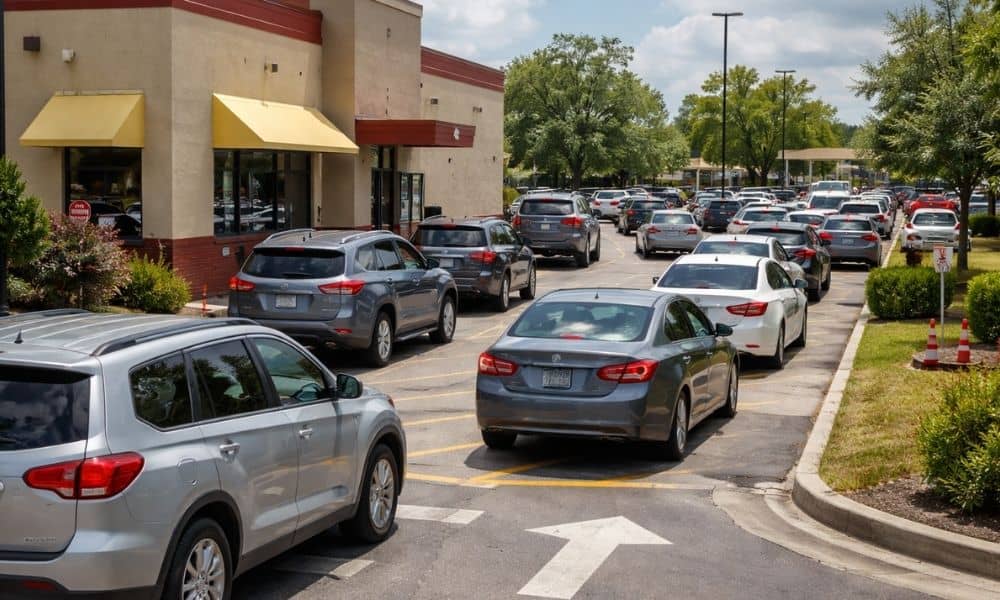
A drive-thru sounds simple. Cars pull in, place an order, and move forward. On a plan, it looks clean and easy to manage. But once the doors open, things change fast. A coffee shop gets busy at 7 a.m. A fast-food spot fills up at lunch. Cars stack up, then keep coming. Soon, the line stretches past the drive-thru lane. It spills into the parking lot. Then it blocks the entrance. Now the whole site struggles. This is where a traffic engineer steps in. Not after the problem shows up, but before the site gets approved.
Why Drive-Thru Lines Become a Problem So Fast
Traffic at a drive-thru doesn’t move at a steady pace. It comes in waves. Morning rush hits hard, then slows down. Lunch rush builds again. During those peaks, cars arrive faster than they leave.
That gap creates a line.
If the space can’t hold that line, cars begin to stack outside the lane. First, they block a few parking spaces. Then they cut across drive aisles. After that, they reach the entrance and affect traffic trying to get in or out.
At that point, the issue is no longer small. It spreads across the entire property.
What Queue Length Means for a Site
Queue length is the number of cars a drive-thru can hold at one time. It sounds simple, but it shapes how the whole site works.
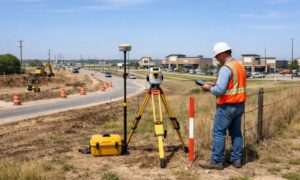
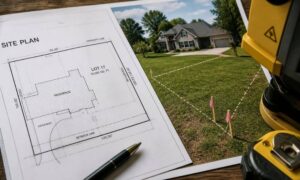
A traffic engineer looks at how many cars show up during the busiest hour and how fast the line moves. They also check the survey data for site layout to see how much space is actually available and how everything is arranged. When you put those pieces together, you get a clear picture of what will really happen on-site.
If ten cars arrive every few minutes but only five move forward, the line builds fast. If the lane only fits eight cars, the rest have nowhere to go.
So they spill out.
That’s how a small layout decision turns into a daily problem.
Why Fort Worth Sites Feel the Impact More
Fort Worth has a mix of older lots and new development. Many commercial sites sit on tight parcels. Others share space with multiple businesses.
That limits how much room a drive-thru can use.
At the same time, many of these sites sit near busy roads. When a line reaches the entrance, it can affect traffic outside the property. Drivers hesitate, slow down, or stop. That creates friction right at the access point.
A traffic engineer in Fort Worth has to think about both sides. The activity inside the site and the movement outside it.
Where Most Designs Go Wrong
Many projects start with a simple idea. Add a drive-thru, keep the layout compact, and move forward.
That works until real demand shows up.
A small coffee shop can draw a long line in the morning. A fast-food location can fill up in minutes during lunch. Those spikes don’t last all day, but they hit hard.
If the design only accounts for average traffic, it falls short during peak times.
And peak times are what matter most.
What a Traffic Engineer Looks for Before Approval
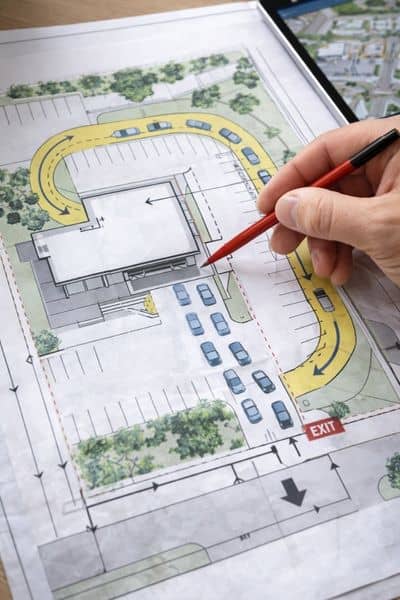
A traffic engineer studies how the site will behave during those busy moments. They don’t rely on guesswork.
They look at how many cars are likely to arrive in a short period. They study how long each car stays in the line. Then they compare that to the actual space on the site.
They also watch how the line interacts with everything around it. A drive-thru lane that crosses a main drive aisle can cause backups. A lane that sits too close to the entrance can block access.
Even a well-sized queue can fail if the layout creates conflicts.
How One Issue Spreads Across the Property
Once a line leaves the drive-thru lane, it doesn’t stay in one place. It moves through the site.
Cars begin to block turning paths. Other drivers slow down or stop. Parking becomes harder to use. Delivery vehicles struggle to get through.
That creates tension between different users of the site. Customers get annoyed. Some leave. Others avoid the location next time.
Over time, the problem becomes part of the property’s reputation.
Why Some Sites Struggle More Than Others
Not all locations have the same risk.
Corner lots often lack space for long lanes. Shared retail centers deal with traffic from several businesses at once. Narrow sites limit how far a line can stretch before it hits something important.
Then demand makes things worse. A popular brand draws more cars than expected. A new location gets attention. Lines grow longer than planned.
Without enough room to absorb that demand, the site feels the pressure right away.
How a Traffic Engineer Helps Fix It Early
Fixing this problem after construction is difficult. Space is already locked in. Buildings, curbs, and lanes are set.
Before approval, there is still room to adjust.
A traffic engineer can shift the layout to create more stacking space. They can move the building slightly or change the direction of flow. They can separate entry and exit points to reduce conflict.
Even small changes can improve how the site works during peak hours.
When to Bring a Traffic Engineer Into the Project
Timing matters more than most people expect.
A traffic engineer should be involved before the site plan is final. That’s when changes are easier and less expensive.
If a project includes a drive-thru, or if the expected demand is high, early review helps avoid bigger problems later.
Waiting until issues show up during review or after opening often leads to delays, redesigns, or daily congestion.
Designing for Real Conditions
A drive-thru adds value to a business. It brings convenience and attracts more customers. But it also adds pressure to the site.
Queue length is where that pressure shows up first.
A traffic engineer helps match the design to real traffic patterns. Not the average day, but the busiest hour.
That’s what keeps the line on-site, the entrance clear, and the property working the way it should.